
· LAANDED Property Group
Sydney's Housing Target Is One Thing. Delivering the Land Is Another.
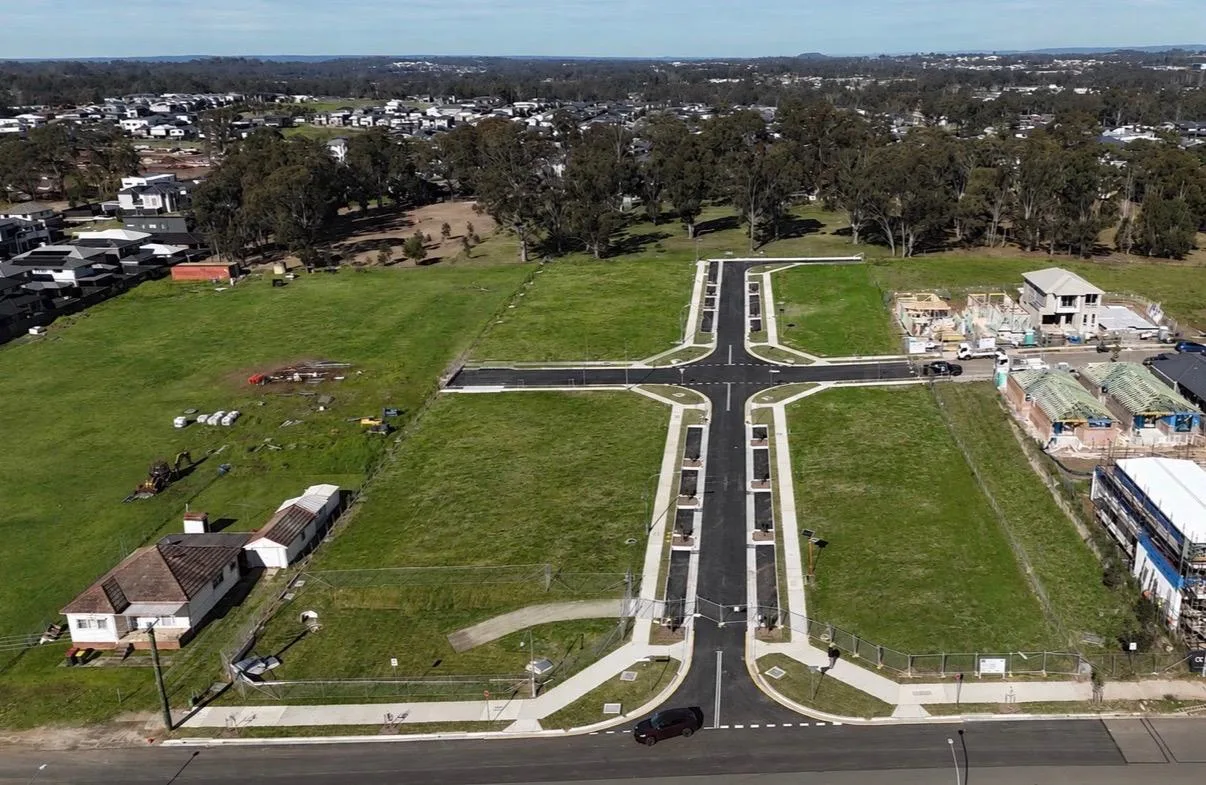
The Sydney Plan sets out the next phase of the city's growth. For Western Sydney, the real challenge is not identifying housing capacity, but delivering serviced, registered land as the cost of doing so continues to rise.
Key facts
- $56,935 in fixed per-dwelling community, recreation and residential transport contributions listed in Liverpool City Council's current Austral and Leppington North schedule for a typical dwelling-house lot, with drainage and administration components separate.
- $13,000.73 Greater Sydney Housing and Productivity Contribution base component per new residential subdivision dwelling lot, effective 1 July 2026.
- 22 Torrens Title residential lots registered at AKIRA, 70 Tenth Avenue, Austral.
- 2026. The NSW Government published the new Sydney Plan in August 2026.
The NSW Government's new Sydney Plan, published August 2026, sets out how Sydney will accommodate significant population, housing and employment growth over the next 20 years.
One of its most important themes is not how much housing Sydney needs, but how that housing can actually be delivered alongside the infrastructure required to support it.
That distinction matters. A parcel of land can be zoned for residential development and counted toward Sydney's future housing capacity without being ready for someone to build a home on it.
Between zoning and registration sit planning, infrastructure contributions, water and sewer servicing, roads and drainage, civil construction, finance, subdivision certification and, ultimately, the creation of individual titles.
Across Western Sydney's growth areas, the cost of moving through that process is changing. For developers, that raises a practical question: what will it actually cost to create the next registered residential lot?
The cost of creating the next lot
A residential subdivision starts with land, but the finished lot carries considerably more than the underlying acquisition cost. Local infrastructure contributions, State infrastructure contributions, water and sewer servicing, roads and drainage, civil construction, consultants, finance, GST and holding costs all form part of the economics of delivering new land.
Austral and Leppington North provide a useful example. Liverpool City Council's current contributions schedule for Austral and Leppington North lists $56,935 in fixed per-dwelling community, recreation and residential transport contributions for a typical dwelling-house lot, with drainage and administration components listed separately again on top. This reflects the council's 2021 contributions plan, which now applies to relevant determinations following the repeal of the earlier 2014 plan.
That contribution program is designed to help fund the infrastructure required as the precinct develops, including open space, stormwater management, transport infrastructure and land acquisition. That infrastructure is necessary to support growth. It also forms part of the replacement cost of creating new housing.
The State contribution has changed too
There has also been a significant change at State level. From 1 July 2026, the former Western Sydney Growth Areas and Western Sydney Aerotropolis Special Infrastructure Contribution arrangements transitioned into the Housing and Productivity Contribution (HPC) framework for relevant new applications. The HPC is a NSW infrastructure contribution applying to specified development, with rates and components determined under the applicable Ministerial planning framework.
For a residential subdivision in Greater Sydney, the current HPC base component is $13,000.73 per new dwelling lot. That is the indexed rate effective from 1 July 2026. The rate is adjusted quarterly against the NSW Road and Bridge Construction Producer Price Index.
Importantly, $13,000.73 is the base component, not necessarily the total State contribution applicable to every site. Depending on location and circumstances, a Strategic Biodiversity Component of $1,230 per dwelling can also apply on Growth Centres biodiversity-certified land until 30 June 2029, and additional transport components may apply elsewhere. Transitional arrangements can also affect developments previously subject to Special Infrastructure Contributions or planning agreements.
The broader point matters more than any single levy. Infrastructure provision has become a significant and growing component of the economics of producing the next generation of residential land.
Zoned land is not development-ready land
This is where the discussion around Sydney's future housing supply needs some context. A parcel can be identified for housing without being ready to accommodate housing. Development-ready land is land sufficiently progressed through planning, servicing, infrastructure and development requirements to enable delivery of housing. There is a substantial development process between the two:
Zoned land, then planning and approvals, then infrastructure and servicing, then civil construction, then subdivision certification, then registered individual titles.
Roads need to be delivered. Drainage needs to work. Water and sewer need to be available. Development conditions and contributions need to be met. Civil works need to be completed and certified. Only then can the original development parcel become individual registered residential lots.
This is why headline numbers around future housing capacity should not be read as immediately available housing supply. Potential housing capacity and development-ready housing supply are not the same thing.
UDIA's most recent State of the Land research reinforces this. Greater Sydney recorded around 8,000 greenfield lot sales in 2025, up 29% year on year, signalling that demand has recovered from the 2023 low. But UDIA also forecasts that the Greater Sydney Megaregion will deliver roughly 117,500 fewer homes over the next five years than the run-rate required to meet the National Housing Accord.
The Sydney Plan makes that distinction increasingly important
The new Sydney Plan brings this issue into sharper focus. Sydney is planning for substantial additional housing over the next two decades, while Western Sydney is expected to accommodate a significant share of the city's population and employment growth.
The challenge is not simply identifying where those homes could theoretically go. It is creating an ongoing pipeline of housing that is feasible, appropriately serviced and supported by infrastructure.
For Western Sydney's greenfield corridors, sequencing matters. Housing, transport, employment, utilities and community infrastructure cannot be planned in isolation if growth is to translate from a planning map into a functioning community. That is particularly relevant across the broader Western Sydney growth corridor as investment in Western Sydney International Airport, Bradfield and associated transport and infrastructure continues to reshape the region.
Why replacement cost matters
For developers, all of this comes back to replacement cost: the cost required to produce comparable new residential land, including relevant land, infrastructure, construction, professional, financing, statutory and holding costs.
Consider a registered residential lot available today, and a comparable lot that will be produced through a future subdivision. The future lot may carry higher infrastructure contributions, higher civil construction costs, additional servicing requirements, greater financing costs and a longer holding period. Its economics are different.
That does not mean land prices automatically rise by the same amount. Purchaser capacity, interest rates, competing supply, market conditions and developer margins all influence the eventual price of land. But developers cannot sustainably produce new lots below the cost required to create them. Over time, the replacement cost of new supply matters.
For anyone assessing Western Sydney land, this creates a more useful question than simply asking how much undeveloped land remains: what will it cost, and how long will it take, to turn that land into the next registered lot?
What registration actually changes
Registration represents an important transition in the development lifecycle. Registered land is land where the individual legal title has been created and registered.
Before registration, a purchaser may be contracting for a proposed lot that remains part of a larger parcel, dependent on completion of the subdivision before its individual title can be created. Once registered, that individual Torrens Title exists.
Registration removes the uncertainty around when the individual title will be created. It does not remove every other risk associated with financing, purchasing or subsequently building on the land, and finance and construction approvals still need to be secured in the ordinary way.
That distinction becomes increasingly relevant when comparing registered lots against future projects that still require significant development work before individual titles can be issued.
AKIRA: from development site to 22 individual titles
This is particularly relevant for LAANDED following the latest milestone at AKIRA, 70 Tenth Avenue, Austral. The project has now reached registration, creating 22 Torrens Title residential lots.
What began as a development site has progressed through planning and approvals, civil construction, infrastructure servicing, subdivision certification and now registration. The individual titles now exist.
For us, registration is more than an administrative milestone. It is a practical example of the difference between land identified for housing and land that has actually been delivered. Our earlier note on why we invested in Austral set out the reasoning behind the site.
As Sydney plans its next phase of growth, and the cost and complexity of creating new residential land continues to evolve, that distinction will only become more important.
Guided by legacy. Delivering long-term value.
Further context
What is the difference between zoned land and registered land?
Zoned land has planning controls that permit or contemplate development, but it may still require approvals, infrastructure, servicing and subdivision works. Registered land has progressed to the point where the individual legal title has been created and registered.
What is the Housing and Productivity Contribution for a residential subdivision in Greater Sydney?
As at 1 July 2026, the Greater Sydney HPC base component for a residential subdivision is $13,000.73 per new dwelling lot. Additional components can apply depending on location and circumstances.
Why does replacement cost matter for residential land?
Replacement cost reflects what it costs to produce comparable new land. As infrastructure contributions, servicing, civil construction, finance and other development costs change, the economics of delivering future residential lots change with them.
Is AKIRA in Austral registered?
Yes. AKIRA at 70 Tenth Avenue, Austral has reached subdivision registration, creating 22 individual Torrens Title residential lots.
Sources
- NSW Government, The Sydney Plan, August 2026
- NSW Planning, Housing and Productivity Contribution
- Liverpool City Council, Section 7.11 Contributions Plan (Austral and Leppington North), current schedule
- IPART, Austral and Leppington North Contributions Plan assessment
- Urban Development Institute of Australia (UDIA), State of the Land 2026
All plans, images, artist's impressions, dimensions and descriptions are indicative only and subject to change without notice. Areas are approximate and subject to final survey and authority approval. Purchasers should rely on the contract of sale and final approved plans.